 English
 Português
 Español
 Français
 Italiano
 Nederlands
 Svenska
 Feelings & emotions
Happy and Sad Faces
Look at happy and sad faces, point to them, and name the feelings. Talk about what brings joy and what can help when someone feels sad.
- Age 2
- 5 min
- Easy
- One child
- Feelings & emotions
Learning areas
Skills practised
About this activity
In this activity, your child looks at faces, points, and hears the words happy and sad. An adult stays nearby to talk and offer support.
Naming feelings can help children express themselves and ask for support. All feelings are welcome.
Learning objectives
- Point to a happy face and a sad face with support.
- Name or indicate at least one feeling with a gesture.
- Share an idea about happiness or what helps when feeling sad, using words, gestures, or pointing.
The printable
Print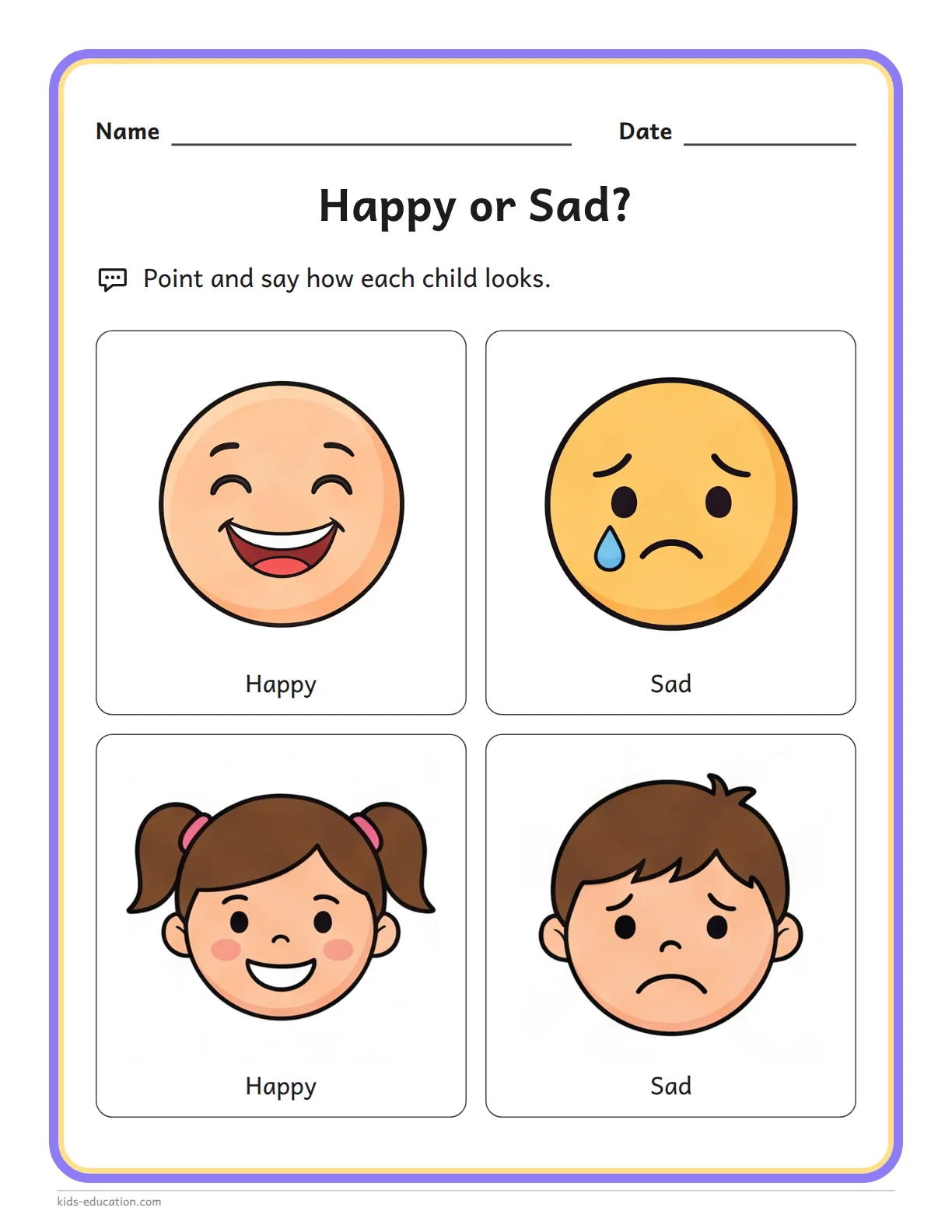
What you need
- Printed page with faces
- A comfortable place to sit
Safety notes
An adult should stay with the child throughout the activity. Keep the page out of the child's mouth and stop if they begin to tear or chew the paper.
How to do it
- Place the page within your child's reach.
- Invite your child to look at the faces with you.
- Point to a face and say, “This child looks happy.”
- Point to a sad face and say, “This child looks sad.”
- Ask your child to point to a happy face and then a sad face. Help if needed.
- Ask what makes your child happy and what might help when they feel sad.
- Welcome their response and remind them that all feelings are okay.
Teaching suggestions
- Give your child time to respond with words, gestures, or pointing.
- If choosing is difficult, show just two faces and name each feeling.
- Connect the conversation to everyday life: “You smiled when we played together.”
- Don't press your child to talk about anything they don't want to share. Listen and offer comfort.
Variations
Make it easier
Cover two faces and explore one happy face and one sad face. Name each feeling before asking your child to point.
Add a challenge
Invite your child to find both happy faces, then both sad faces.
Keep going
If your child wants to, make happy and sad expressions together in a mirror and name each one.
Talk about it
- What do you see on this face?
- What makes you happy?
- What do you like people to do when you feel sad?
- How can we help someone who feels sad?
What to look for
- Notice whether your child points to a happy face and a sad face, with or without help.
- Notice whether your child names a feeling or indicates one by gesturing or pointing.
- Notice whether your child shares an idea about happiness or comfort.
 Story & talk
 Roll and play
 Journal page
 Songs & fingerplays