
 English
 Português
 Español
 Français
 Italiano
 Nederlands
 Svenska
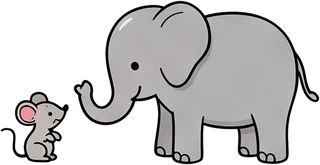 Opposites
Match Summer Opposites
Match the Summer Opposites
Match four pairs of opposites with animals and summer things: big and small, hot and cold, fast and slow, day and night.
- Age 3
- 10 min
- Easy
- Any group size
- Opposites
About this activity
On this page, children match pictures that show opposite ideas. An adult reads the words and talks about each pair.
The activity builds vocabulary and encourages children to notice differences. For a three-year-old, pointing to the pairs before drawing lines is a great way to take part.
Learning objectives
- Point to or match pictures showing at least two pairs of opposites.
- Use or recognize words such as big, small, hot and cold during conversation.
- Try drawing lines between pictures.
The printable
Print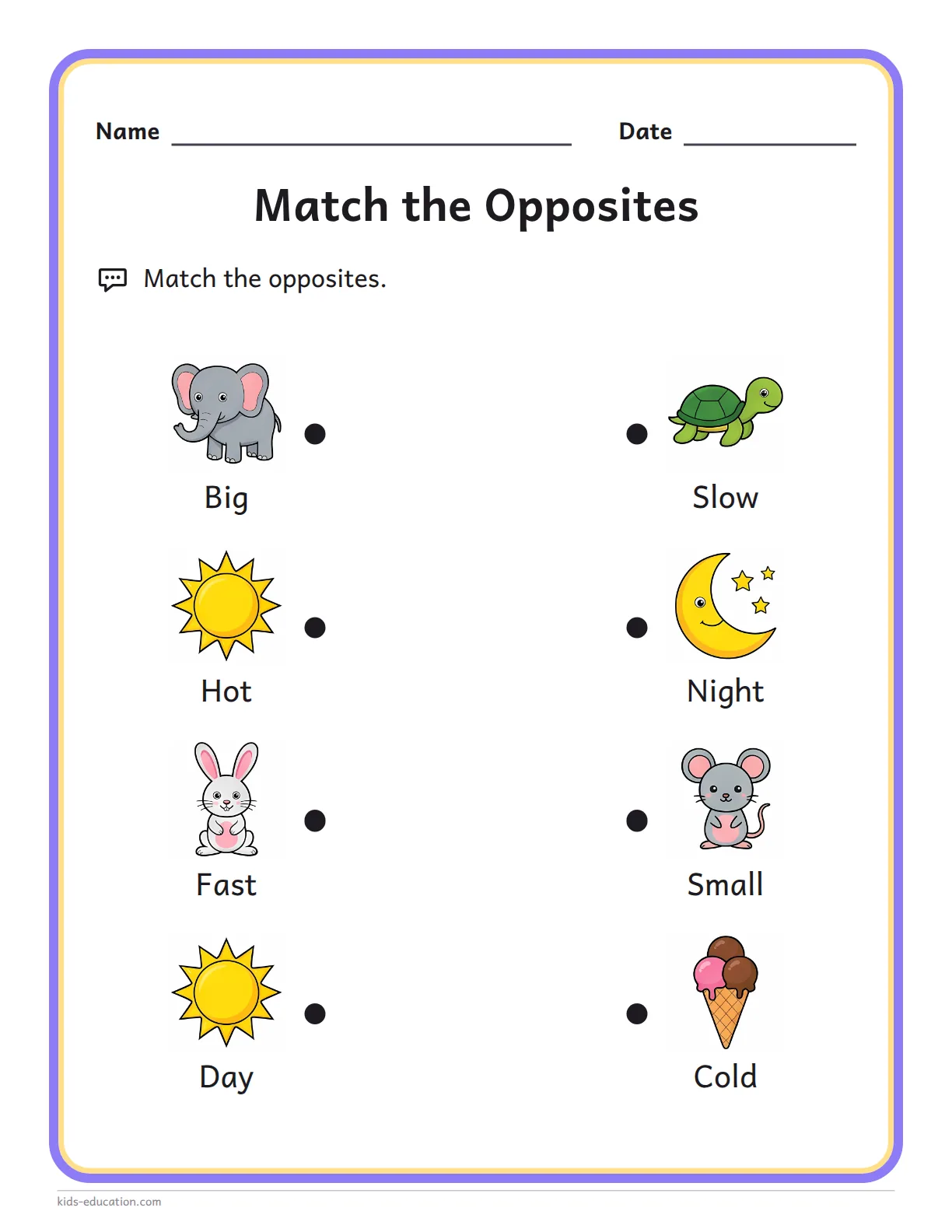
What you need
- Printed activity page
- Thick crayon or colored pencil
Safety notes
Use non-toxic drawing materials and stay with your child during the activity. Clear a safe space for movement play.
How to do it
- Print the page and place it on a table.
- Look at the pictures together and name each one.
- Read the words beside the pictures, including the two words beside the suns.
- Show how to match the big elephant with the small mouse.
- Invite your child to point to or connect the other pairs, one at a time.
- When you finish, talk about the pairs your child found.
Teaching suggestions
- Read the words aloud: the two sun pictures have different clues, hot and day.
- If the page feels tricky, cover the other pairs with a sheet of paper and show one pair at a time.
- Let your child point to the pairs and offer help drawing the lines.
- Talk about everyday experiences, such as feeling the sun's warmth or holding something cold.
- In a group, give each child time to point or comment without expecting an answer.
Variations
Make it easier
Show just two pairs at first. Your child can point while you draw the lines.
Add a challenge
Ask your child to name the opposites in each pair and find another example of one of them.
Keep playing
Move fast like a rabbit and slowly like a turtle, or make the movements with your hands.
Talk about it
- What differences do you notice between the elephant and the mouse?
- How does ice cream feel when it is cold?
- How do you think the rabbit and turtle move?
- What do you like to do during the day? What about at night?
What to look for
- Notice whether your child points to or connects at least two pairs of opposite pictures.
- Listen for words about opposites that your child recognizes or uses.
- Notice how your child tries to draw lines or point out a path between pictures.
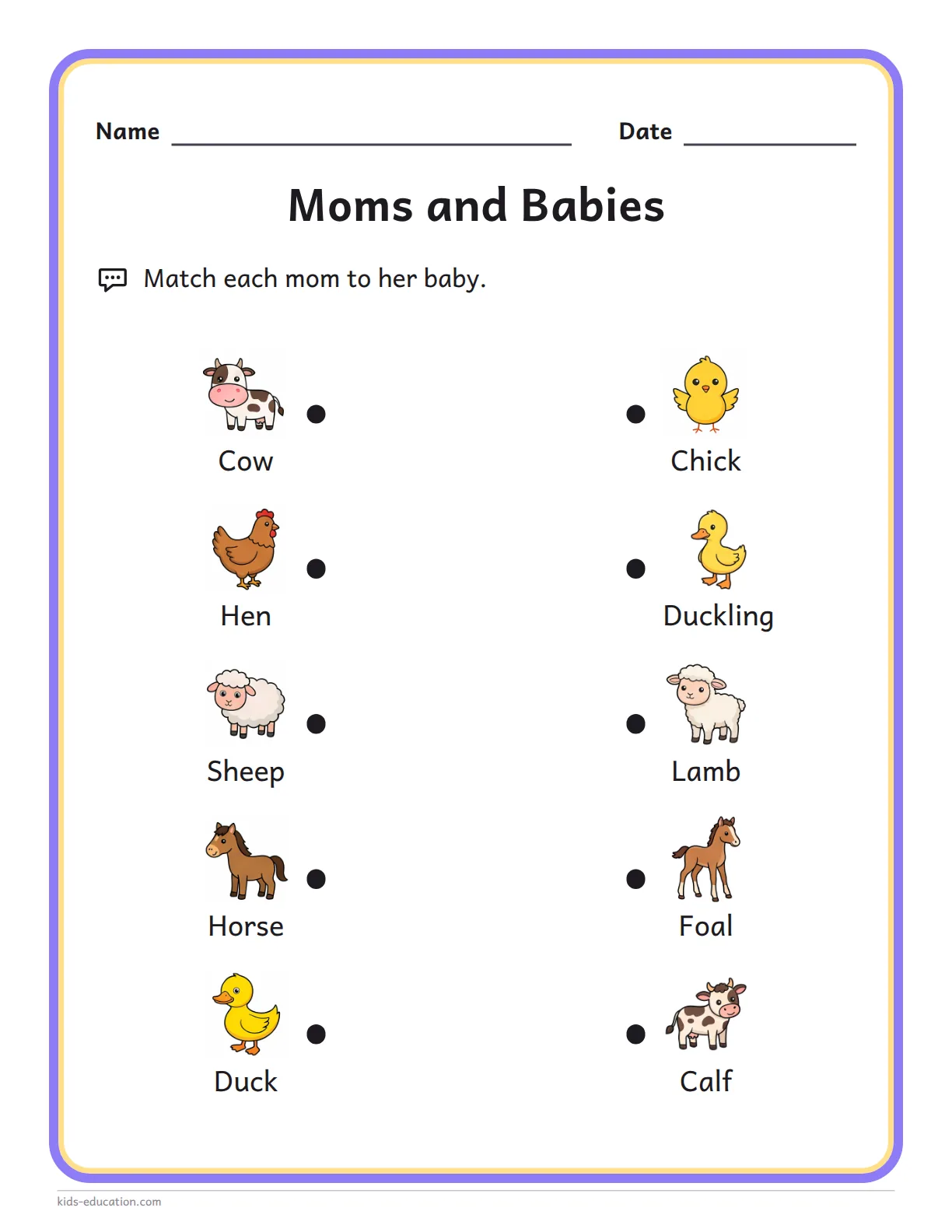
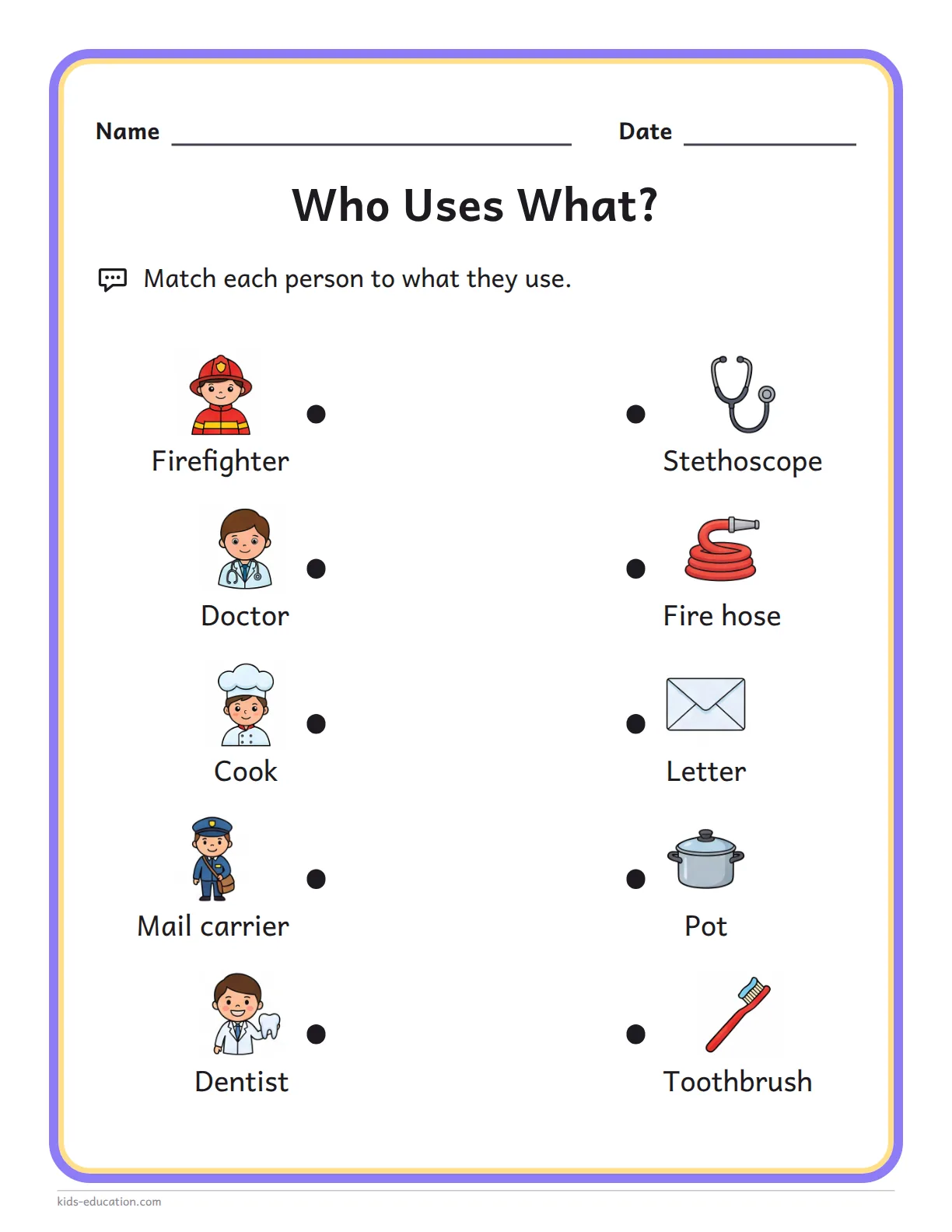
 Matching
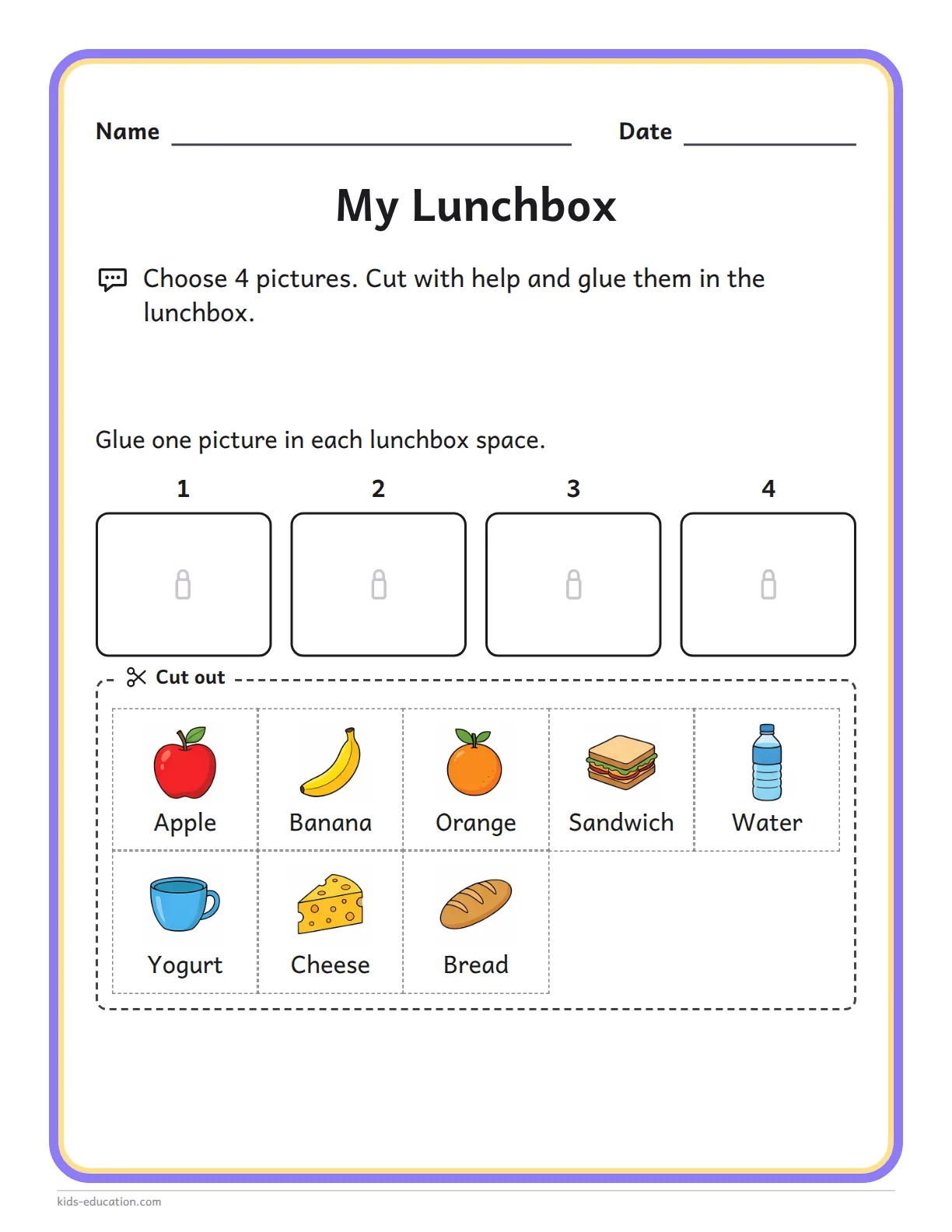
 Cut and paste
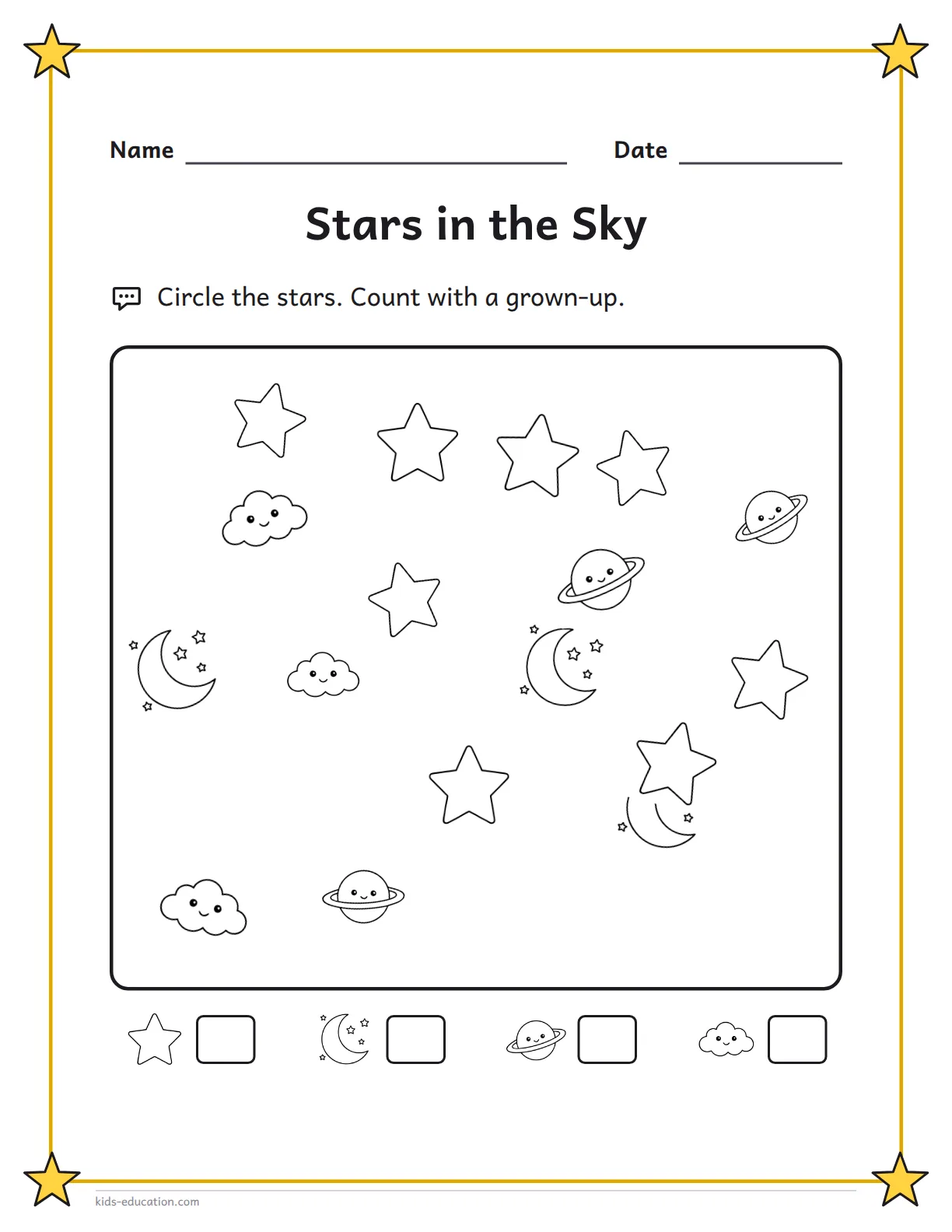
 Find and circle