
 English
 Português
 Español
 Français
 Italiano
 Nederlands
 Svenska
 Rhyming
Find Rhyming Words
Winter and Everyday Rhymes
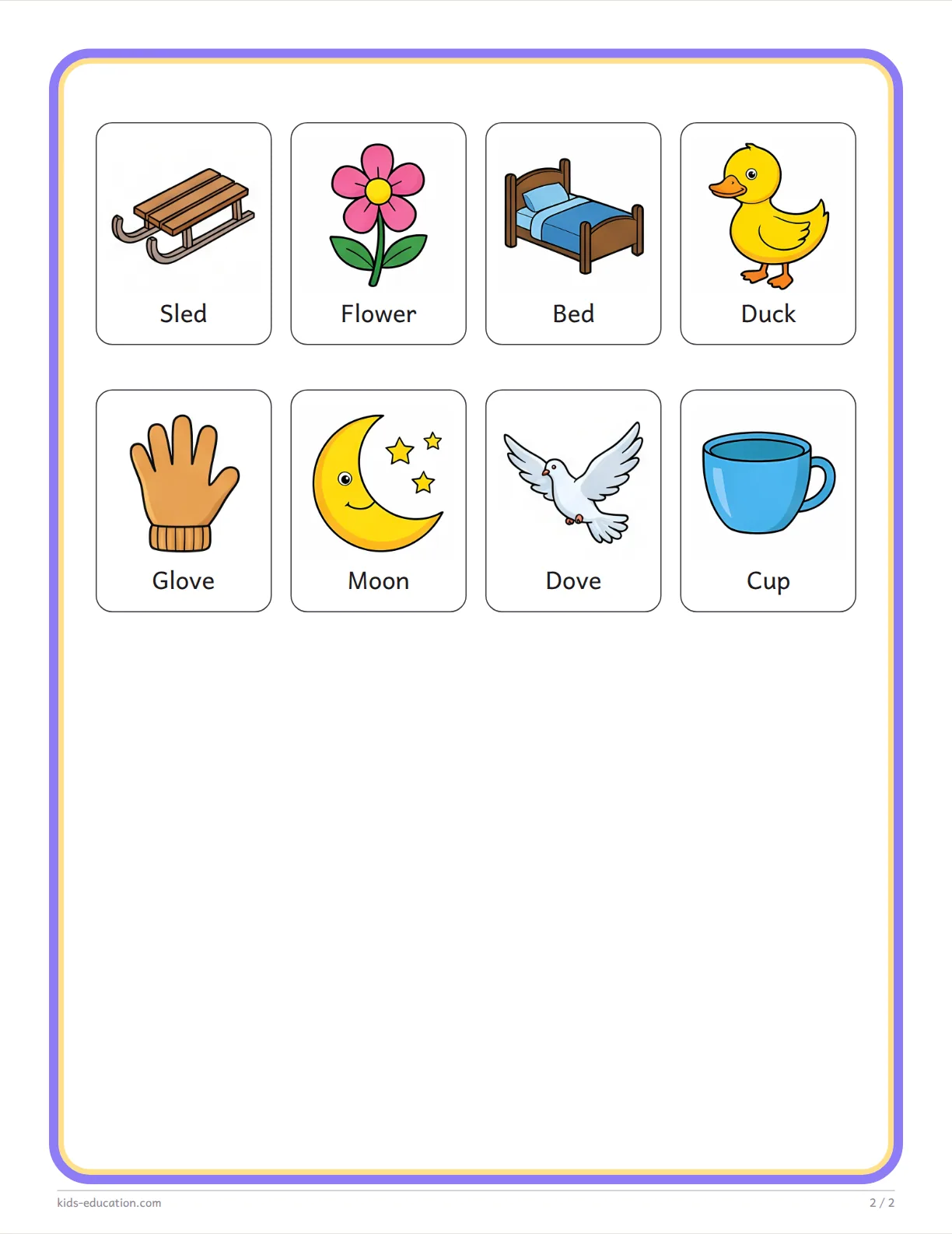
Children listen to picture names and circle the word that rhymes with the first picture in each row.
- Age 5
- 15 min
- Medium
- Any group size
- Rhyming
Learning areas
Skills practised
About this activity
In this activity, children look at winter and everyday pictures. With an adult’s help, they say the names and listen for words that end with the same sound.
Playing with rhymes helps children notice sounds in words, an important early reading skill.
Learning objectives
- Identify a word that rhymes with the first picture in each row.
- Say pairs of rhyming words aloud.
- Circle one picture in each row.
The printable
Print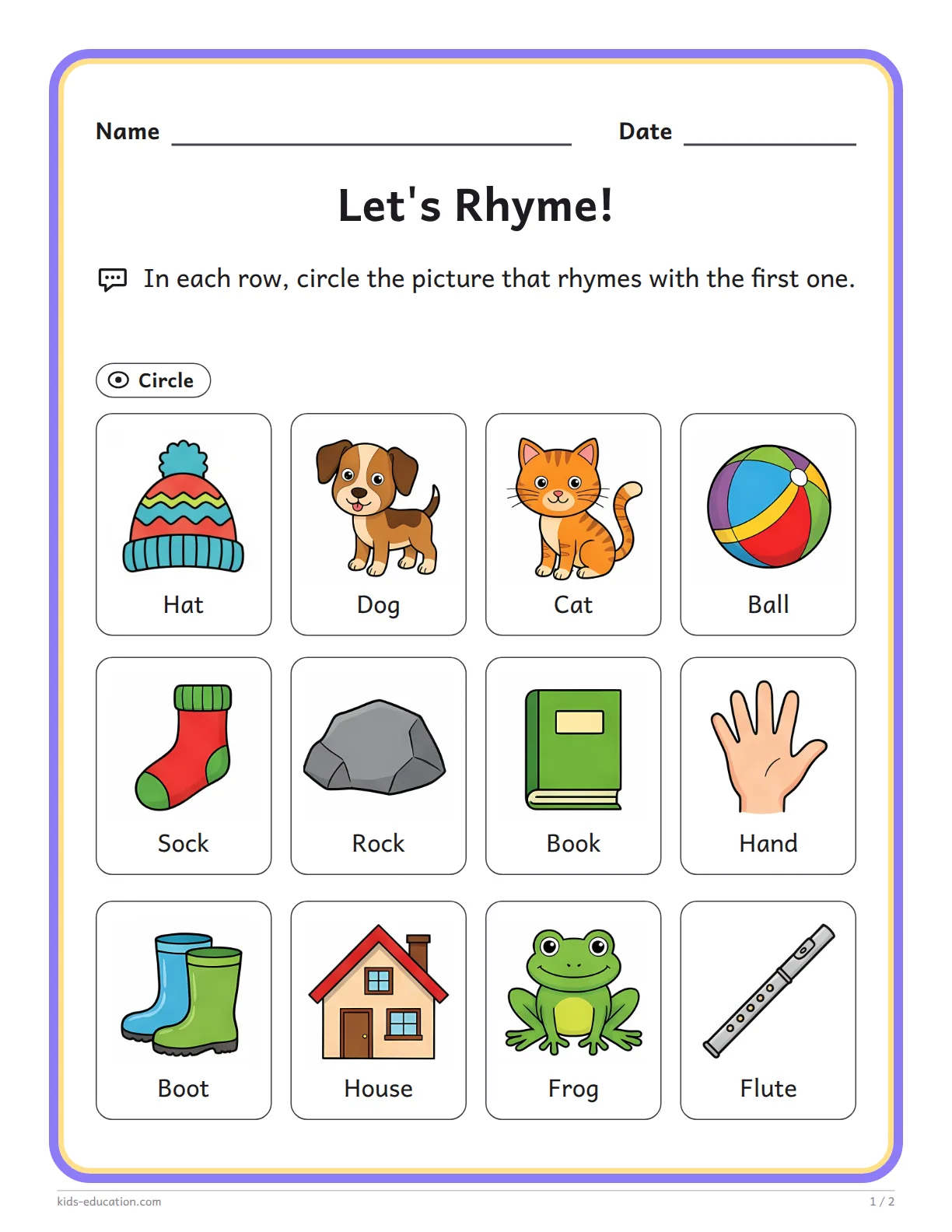
What you need
- Printed activity sheet
- Pencil or crayon
Safety notes
Use age-appropriate drawing materials and supervise the activity.
How to do it
- Print the sheet and place it on a comfortable surface.
- Explain that rhyming words have the same ending sound.
- Read the first row aloud: “hat, dog, cat, ball.” Show how “hat” and “cat” rhyme.
- Invite the child to circle the cat, not the first picture.
- Read the picture names in the other rows and give the child time to choose one answer in each row.
- Say the rhyming pairs together and celebrate the child’s effort.
Teaching suggestions
- Read the labels under the pictures so everyone uses the same words.
- Draw attention to the ending sounds: “h-at, c-at.”
- If choosing is tricky, cover two options and compare the first picture with one option at a time.
- In a group, give each child time to think before sharing an answer.
- Play with rhymes when you see a hat, a sock or another everyday object.
Variations
Make it easier
Offer two choices per row and say the words slowly, emphasizing their ending sounds.
Make it harder
Before looking at the choices, ask the child to think of another word that rhymes with the first picture.
Take it further
Look for objects at home or in the classroom and make up rhymes for their names, even if the rhymes are silly words.
Talk about it
- How could you tell those words rhyme?
- What sound do you hear at the end of “hat” and “cat”?
- Which rhyming pair did you like best? Why?
- What other word rhymes with “sock”?
What to look for
- Notice whether the child chooses a picture that rhymes with the first picture in each row.
- Listen for the child to say at least one pair of rhyming words.
- Check whether the child circles one choice in each row.
 Story & talk
 Picture cards