
 English
 Português
 Español
 Français
 Italiano
 Nederlands
 Svenska
 Hands-on activity
Balloon Breathing
Use a picture page to practice gentle balloon breathing with an adult, imagining the smell of a flower and blowing out a pretend candle.
- Age 3
- 5 min
- Easy
- Any group size
- Hands-on activity
Learning areas
Skills practised
About this activity
Look at the pictures together and invite your child to practice gentle breathing with you. They can imagine their belly is a balloon, smell a flower, and blow out a pretend candle.
This practice can offer comfort when a child feels angry. At age 3, children learn best through short, supportive demonstrations.
Learning objectives
- Point to a picture when choosing how to breathe.
- Try breathing in and out gently with an adult's support.
- Communicate feelings using words or gestures.
The printable
Print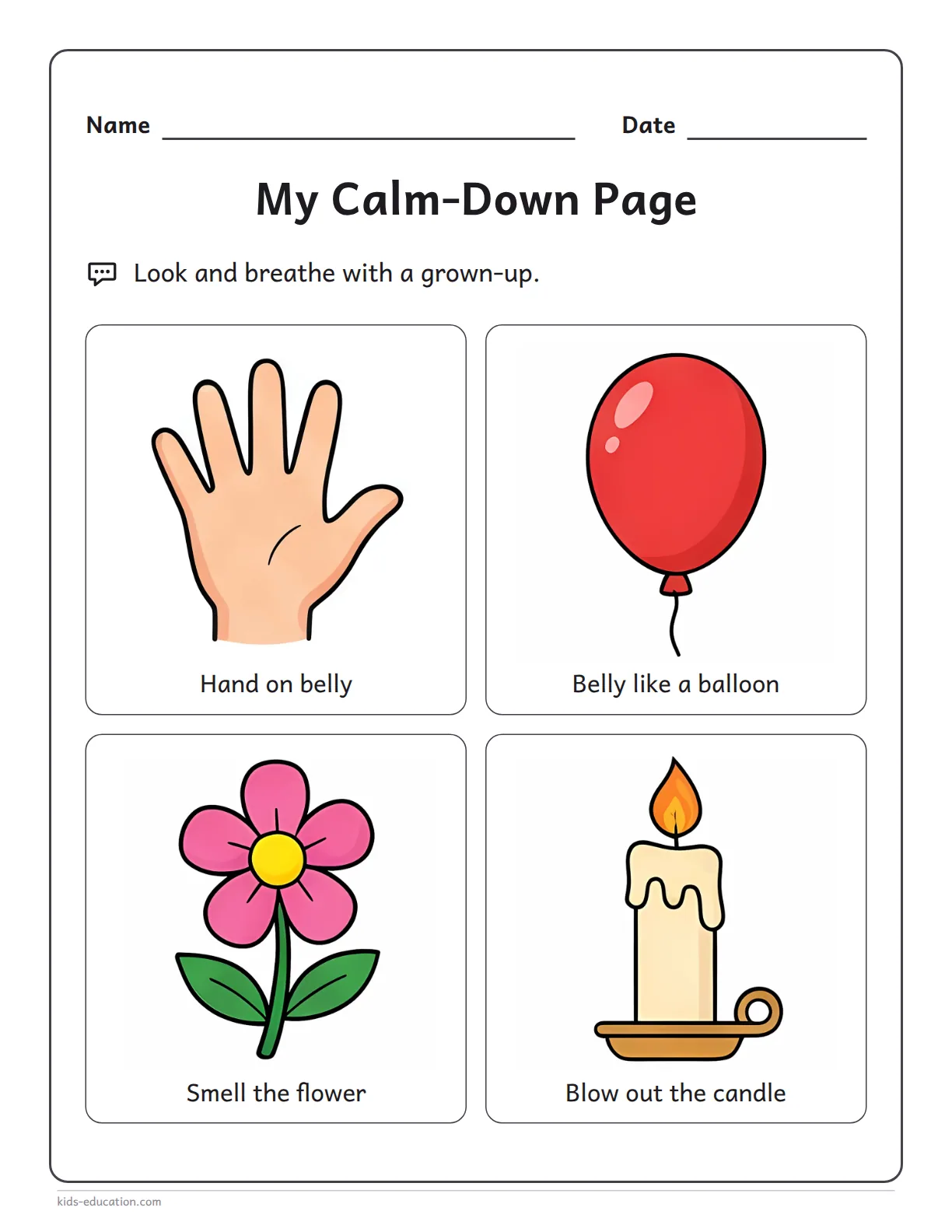
What you need
- Printed calm-down page
- A comfortable place to sit or stand
Safety notes
Use only the pictures; no lit candle or real balloon is needed. Do not ask your child to hold their breath or breathe forcefully. Stop if they feel uncomfortable or dizzy.
How to do it
- Put the page in a quiet, accessible place.
- Show your child the pictures and explain that the page can help when they feel angry.
- Invite your child to put a hand on their belly if they want to.
- Show them how to breathe in gently through the nose, imagining their belly as a balloon filling up.
- Point to the flower and candle. Demonstrate smelling the imaginary flower and blowing out the pretend candle.
- Invite your child to try with you, without forcing their breath.
- Put the page away or leave it where your child can see it and use it again when they want to.
Teaching suggestions
- Say, “It's okay to feel angry. I'm here with you.”
- Practice first during a calm moment, rather than waiting for a difficult one.
- If your child doesn't want to join in, stay nearby and offer again later.
- In a group, show the pictures and invite each child to follow along at their own pace.
Variations
Easier
Choose just the flower and candle. Your child can watch while you demonstrate.
More challenging
Invite your child to point to the pictures in order and tell you what to do for each one.
Extend
Ask where the page could go so your child can find it whenever they want.
Talk about it
- How do you know when you're angry?
- Which picture would you like to choose now?
- How does your belly move when you breathe?
- What else helps you when you're angry?
What to look for
- Notice whether your child points to a picture or makes a choice using a gesture or word.
- Notice whether they try breathing in and out with your support.
- Notice whether they communicate how they feel, even without words.
 Roll and play
 Songs & fingerplays
 Journal page
 Story & talk