
 English
 Português
 Español
 Français
 Italiano
 Nederlands
 Svenska
 Bingo
Feelings Bingo
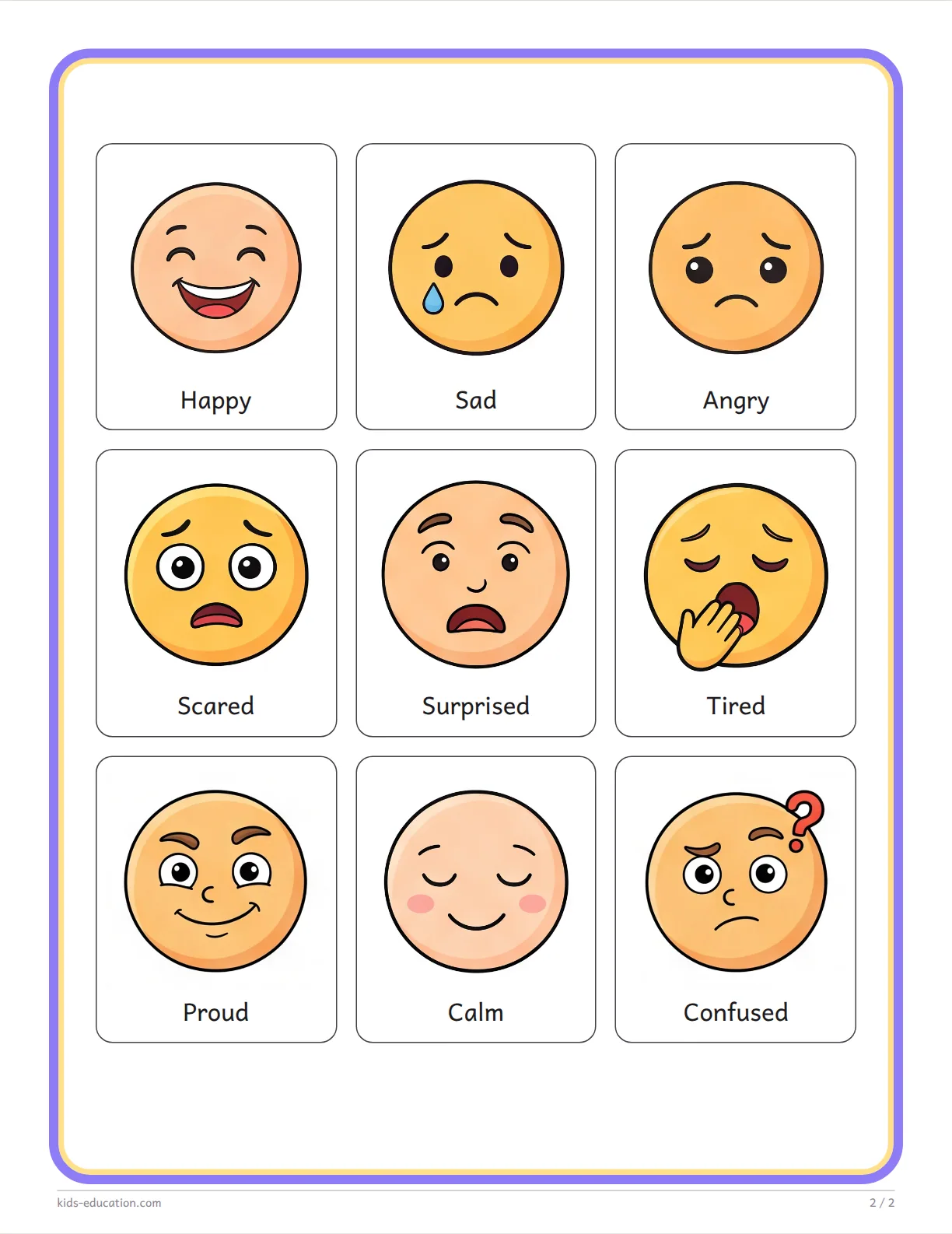
Draw face cards and find the matching feelings on your bingo card. Talk together about how people may feel.
- Age 4
- 15 min
- Easy
- Small group
- Bingo
Learning areas
Skills practised
About this activity
In this bingo game, children look at faces, listen to the name of each feeling, and find the matching picture on their card.
The game builds vocabulary and gives children practice paying attention and waiting for the next turn. All feelings are welcome.
Learning objectives
- Match the face on a drawn card to the same face on a bingo card.
- Name or point to at least two feelings with support.
- Take part in the game while waiting for the next card.
The printable
Print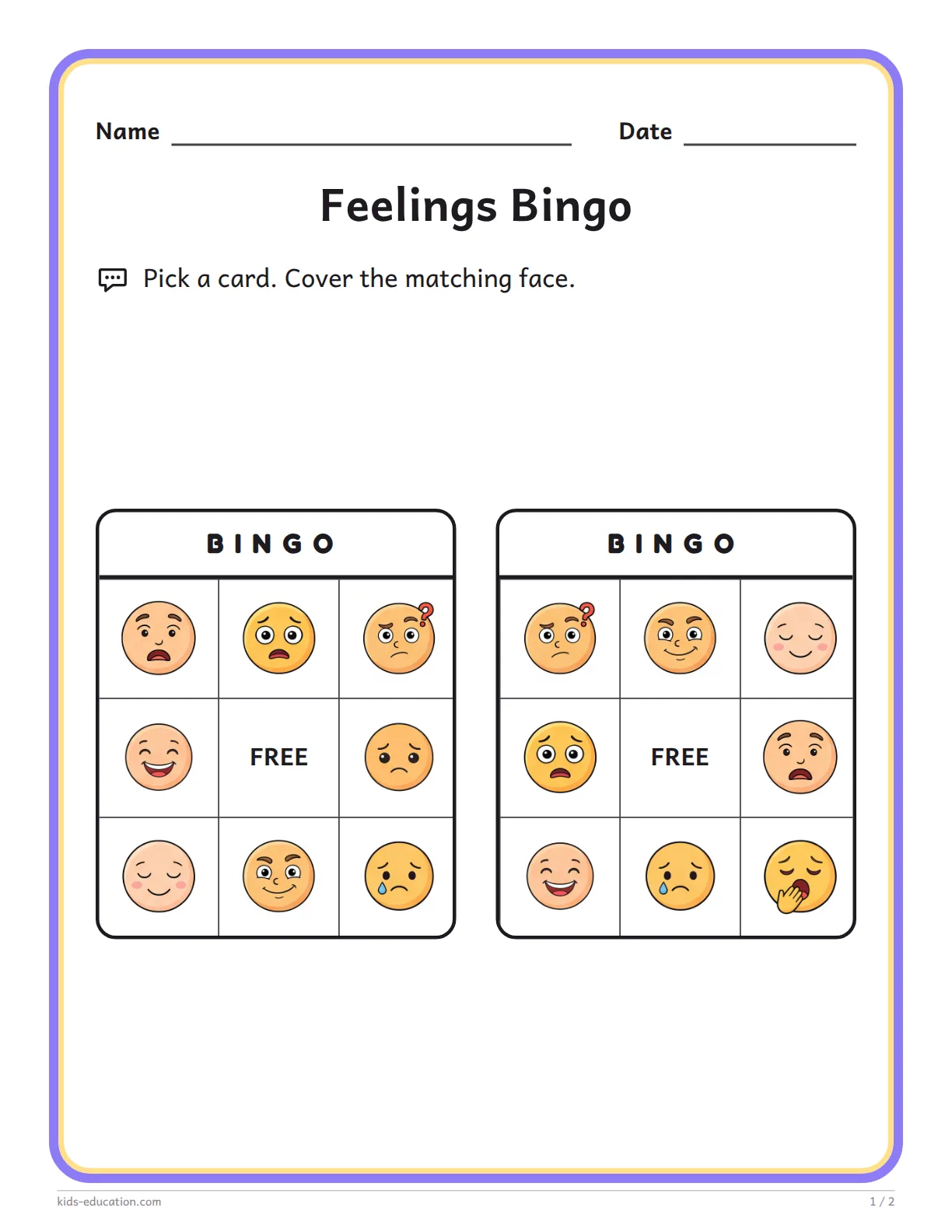
What you need
- Printed bingo cards and calling cards
- Child-safe scissors
- Pieces of paper to cover the pictures
- A container or envelope for the calling cards
Safety notes
An adult should supervise the use of child-safe scissors and may cut out the pieces before the activity. Collect the paper pieces after the game.
How to do it
- Cut out the bingo cards and calling cards. Put the calling cards in the container.
- Give each child a bingo card and some pieces of paper.
- Show a few faces and name the feelings.
- Draw and show a calling card. Demonstrate how to cover the matching face on a bingo card.
- Keep drawing cards as the children find and cover the matching faces.
- When someone completes a row, celebrate everyone's participation and talk about the faces.
Teaching suggestions
- Read each card's label aloud and give children time to look.
- If a child needs help, point to two pictures and let them choose.
- Explain that a face can give clues, but it cannot tell us for certain how someone feels.
- Invite children to talk about everyday situations without asking them to share personal experiences.
Variations
Make it easier
Play together with one bingo card. Place each calling card beside it for comparison.
Make it harder
Name the feeling before showing the card and invite children to find the face.
Extend the play
After the game, invite children to draw a face and talk about it if they wish.
Talk about it
- What do you notice about this face?
- When might someone feel surprised?
- What might help someone who feels scared?
- What are other ways we can show how we feel?
What to look for
- Notice whether the child finds the face that matches the calling card.
- Notice whether the child points to or names feelings during the game.
- Observe how the child takes part while waiting for each card.
 Memory game
 Board game
 Scavenger hunt